
By Estelle | HerWorkshop.co.uk
If you’ve started looking into power tools, you’ve already noticed that three brands come up again and again: Bosch, DeWalt, and Makita. They dominate the market, they’re trusted by both professionals and DIYers, and they’re all genuinely excellent. So how do you choose?
I’ve used tools from all three brands. I’ve drilled through Victorian brick with a DeWalt, sanded down floors with a Bosch, and borrowed a Makita multi-tool more times than I care to admit. I have a clear opinion — but more importantly, I want to help you understand the differences so you can make the right choice for your situation.
Because here’s the thing nobody tells you: picking a power tool brand isn’t just about picking a tool. It’s about picking a battery ecosystem that you’ll likely be building on for the next decade.
💬 Estelle’s note: I personally use DeWalt across my entire workshop — drill, jigsaw, multi-tool, sander, circular saw, and more. The reason is simple: every single one runs on the same 18V XR battery. When you’re mid-project and a battery dies, you just grab one off another tool. No hunting for the right charger, no carrying six different battery packs. Once I made the switch to a single ecosystem, I never looked back.
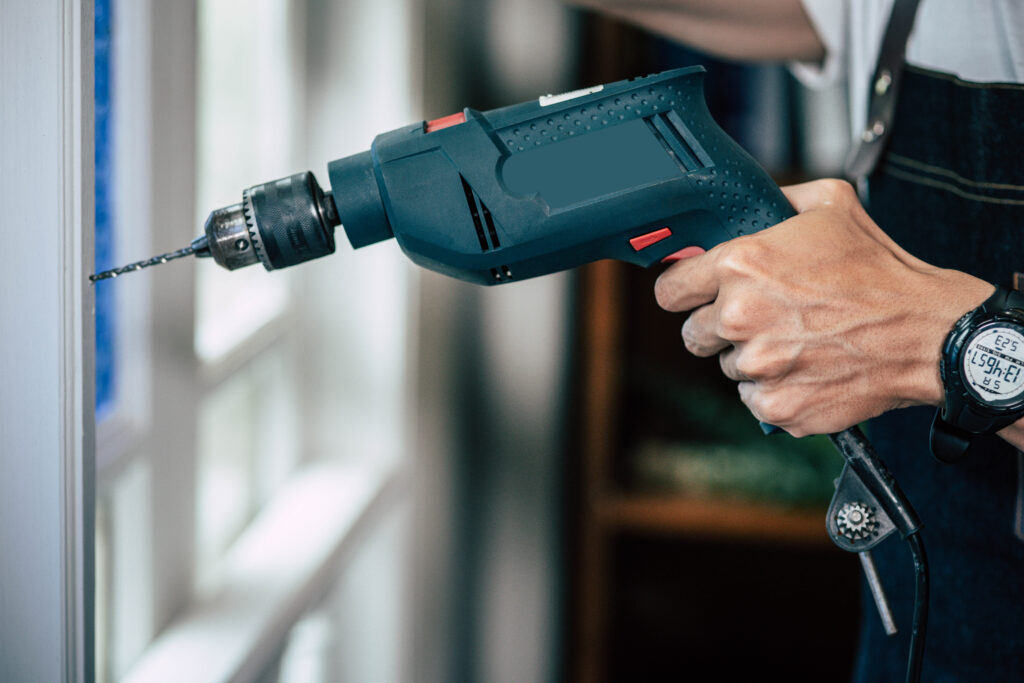
Why Brand Choice Matters More Than You Think
Modern cordless power tools run on rechargeable lithium-ion battery packs. These batteries are brand-specific — a DeWalt battery won’t fit a Makita tool, and vice versa.
This means that once you buy your first tool with a battery, your second tool purchase is strongly influenced by that first choice. Buying into the same brand means your new tool can share the battery you already own — potentially saving you £40–£80 on a battery pack you’d otherwise need to buy separately.
This is called a battery ecosystem, and understanding it is the single most important thing to get right before you buy your first cordless tool.
🔵 Bosch — The Reliable All-Rounder
Bosch has been making power tools since 1932 and is one of the most recognisable names in DIY worldwide. In the UK, you’ll find two ranges — the green consumer range (sold in B&Q and supermarkets) and the blue professional range. For serious home DIY, always go blue.
What Bosch Does Best
- Compact, lightweight designs — Bosch tools are often the smallest and lightest in their category, which matters enormously when you’re working overhead or in tight spaces.
- Precision and control — Bosch tools are favoured by furniture makers and finish carpenters for their accuracy and smooth operation.
- Corded tools — Bosch makes some of the best corded tools on the market, including outstanding circular saws and mitre saws.
- Value — Bosch Professional tools often come in slightly under DeWalt and Makita at equivalent quality.
Bosch Battery System
Bosch Professional uses an 18V battery system called ProCORE. It’s a solid, well-supported platform. However, it doesn’t quite match the size of the DeWalt or Makita ecosystems in terms of available tools.
Who Should Choose Bosch?
Bosch is ideal if you value lightweight, compact tools and precision. If you’re doing a lot of furniture work, detailed carpentry, or if you just want tools that feel balanced and refined in the hand, Bosch is an excellent choice.
- ✅ Lightweight and compact — great for smaller hands
- ✅ Excellent build quality
- ✅ Strong corded tool range
- ✅ Usually slightly cheaper than DeWalt at equivalent spec
- ❌ Smaller ecosystem than DeWalt or Makita
- ❌ Green consumer range is significantly weaker — stick to Professional (blue)
👉 Check price on Amazon | 👉 Check price at Screwfix
🟡 DeWalt — The Professional Powerhouse
DeWalt has been the tool of choice for builders and tradespeople in the UK for decades, and for good reason. The brand is known for outstanding durability, raw power, and one of the largest battery ecosystems in the industry.
What DeWalt Does Best
- Power — DeWalt brushless tools are among the most powerful in their class. The 18V XR range handles everything from light drilling to heavy-duty demolition.
- Durability — DeWalt tools are built to survive building sites. They’ll easily handle anything a home DIYer can throw at them.
- Ecosystem — The 18V XR system covers drills, jigsaws, circular saws, sanders, multi-tools, hoovers, lights, and much more. It’s the largest ecosystem of the three brands.
- FlexVolt — DeWalt’s innovative battery technology works on both 18V and 54V tools, future-proofing your investment.
- Warranty — DeWalt offers a 3-year warranty on tools when registered, and a full lifetime warranty against manufacturing faults.
DeWalt Battery System
The 18V XR platform is the gold standard for home DIYers and professionals alike. The range of compatible tools is enormous, and the batteries are widely available. The newer FlexVolt batteries are backward-compatible with all 18V tools, meaning your investment is protected as the range evolves.
Who Should Choose DeWalt?
DeWalt is the best choice if you’re planning to build a serious toolkit over time and want everything to work together seamlessly. It’s also the best choice if you’re tackling big projects — deck building, partition walls, bathroom renovations — where you need reliability and power.
💬 Estelle’s note: Every cordless tool in my workshop runs on the same DeWalt 18V XR battery. My drill, jigsaw, multi-tool, sander, and circular saw all share the same packs. When I’m in the middle of a project and the battery in my drill dies, I swap it straight to the jigsaw battery. No faff, no delay. That single battery system has made such a difference to how I work. It’s the main reason I’d recommend DeWalt to anyone planning to build a toolkit over time.
- ✅ Exceptional power and durability
- ✅ Largest 18V ecosystem — huge tool range
- ✅ FlexVolt future-proofing
- ✅ Strong warranty including lifetime manufacturing cover
- ✅ Professional standard build quality
- ❌ More expensive than Bosch or Ryobi at entry level
- ❌ Heavier than Bosch tools
👉 Check price on Amazon | 👉 Check price at Screwfix
🟢 Makita — The Precision Specialist
Makita was founded in Japan in 1915 and has been making power tools since 1958. The brand is known for its precision engineering, smooth operation, and incredibly fast chargers — Makita chargers are the quickest in the industry, which matters more than you’d think when you’re mid-project.
What Makita Does Best
- Precision and feel — Makita tools feel ‘finer’ in the hand than most competitors. They’re the tool of choice for kitchen fitters, joiners and anyone doing detailed finish work.
- Charger speed — Makita chargers are the fastest around. A flat battery can be back to full in 22 minutes on some models.
- 18V LXT platform — a mature, well-supported ecosystem with a huge range of tools, including some outstanding specialist tools you won’t find elsewhere.
- 40V XGT — for heavy-duty applications where 18V isn’t enough, Makita’s 40V system offers serious power, though it’s a separate ecosystem.
Makita Battery System
The 18V LXT platform is one of the most mature in the industry with over 250 compatible tools. Worth noting: Makita’s newer 40V XGT system is completely separate and incompatible with 18V batteries, so choose carefully if you’re starting fresh.
Who Should Choose Makita?
Makita is the best choice for precision work — detailed carpentry, furniture making, kitchen fitting. If the quality of the finish matters above all else, Makita is the tool that will help you achieve it.
- ✅ Exceptional precision and finish quality
- ✅ Fastest chargers in the business
- ✅ Huge 18V LXT ecosystem (250+ tools)
- ✅ Excellent build quality and longevity
- ❌ Can be more expensive than DeWalt at equivalent spec
- ❌ The 40V XGT system is separate — can cause confusion
👉 Check price on Amazon | 👉 Check price at Screwfix
Head-to-Head Comparison
| Category | Bosch | DeWalt | Makita |
|---|---|---|---|
| Best For | Precision & compactness | Power & big projects | Finish work & precision |
| Battery Ecosystem | 18V ProCORE | 18V XR + FlexVolt | 18V LXT + 40V XGT |
| Tool Range Size | Good | Excellent (largest) | Excellent |
| Weight | Lightest | Medium-Heavy | Medium |
| Charger Speed | Good | Good | Best in class |
| Price Level | £-££ | ££-£££ | ££-£££ |
| Warranty | 3 years | 3 years + lifetime | 3 years |
| Best entry kit | GSB 18V-55 Twin Pack | DCD796/DCF887 Twin Pack | DHP484/DTD153 Twin Pack |
What About Ryobi?
You’ll often see Ryobi mentioned alongside these three. It’s a solid homeowner-grade brand with the largest single battery ecosystem on the market (200+ tools, all on the same 18V battery). The price is lower than all three above.
The honest assessment: Ryobi is excellent for light-to-medium DIY use. If you’re planning to hang pictures, assemble furniture and do occasional jobs, Ryobi is more than good enough. But if you’re tackling serious renovation projects — the kind where your tools need to work hard for hours — the build quality of Bosch, DeWalt or Makita will serve you better.
My Verdict — Which Should You Choose?
Choose Bosch if you want lightweight, precise tools at a slightly lower price point, especially for detailed or indoor work.
Choose DeWalt if you’re planning to build a serious toolkit over time and want the largest ecosystem, best power, and outstanding durability. This is my personal choice.
Choose Makita if precision and finish quality are your priority, or if charger speed matters to you.
Whichever you choose, commit to it. The real value of these brands is in building an ecosystem over time — and that only works if all your tools share the same battery.
Frequently Asked Questions
Can I use DeWalt batteries in a Makita tool?
No — batteries are brand-specific. Each brand’s battery system is proprietary and incompatible with others. This is why choosing your brand carefully before you start is so important.
Which brand is best for beginners?
All three are suitable for beginners at the professional end. For your very first tool, any of them will serve you well. The most important thing is to pick one and stick with it.
Is the green Bosch range ok for DIY?
The green consumer range is fine for very light, occasional tasks. But if you’re tackling real projects, invest in the blue Professional range — the quality difference is significant.
What about Milwaukee?
Milwaukee is excellent — arguably the best professional-grade brand available — but it’s expensive and aimed squarely at trades. For home DIY, DeWalt and Makita offer comparable quality at a more accessible price.
This post contains affiliate links. If you buy through my links, I may earn a small commission at no extra cost to you. I only ever recommend tools I genuinely believe in.
Have questions? Drop them in the comments below — I’m happy to help! 🔧